Begur is one of the most authentic little towns on the Costa Brava. The ruins of a medieval castle sit on top of the hill, narrow lanes wind down past colourful indianos mansions, and down below, among the pines and rocks, there are some seriously beautiful coves. There are no big hotels or busy promenades here: people love Begur for its atmosphere, its nature and its slow pace of life.
In this guide you'll find a bit of history, the old town and the castle, the best coves, the coastal paths, what Begur is like today, and how to get here from Barcelona and from the airport.
A Bit of History
Begur grew up at the foot of a castle built on top of the hill back in the Middle Ages. In those days pirates often raided this coast, so in the 16th century locals built defensive towers around the town. Several of them are still standing and have become one of Begur's trademarks.
In the 19th century, lots of locals left for Cuba to try their luck. The ones who came back rich, known as "indianos", built stunning colonial-style mansions in Begur, with bright facades, verandas and gardens. They did a lot to shape the look and feel of the town.
In the 1950s and 1960s, Begur opened up to international tourism. It grew in a low-key way, carefully looking after its historic centre and the natural beauty of the coastline around it.
The Old Town and the Castle
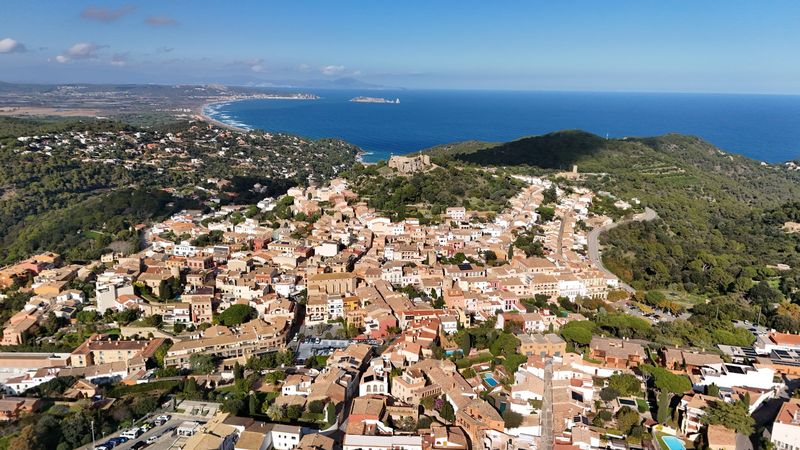
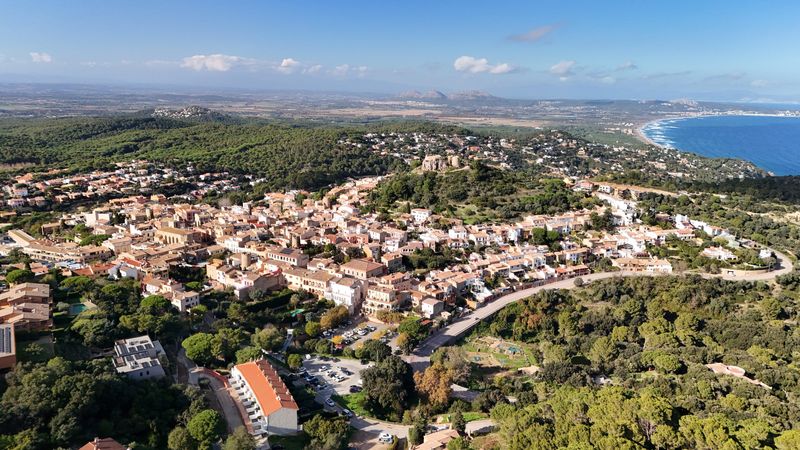
Start your visit with the walk up to the castle ruins. Only the walls are left, but the view from the top of the hill is worth it: tiled roofs below, pine-covered hills all around, and in the distance the deep blue sea and, on a clear day, the coast all the way to the Medes Islands.
On the way down, pop into the 17th-century church of Sant Pere and wander through the narrow lanes of the centre. Around every corner you'll spot defensive towers and indianos houses, many of them restored and turned into cosy boutique hotels, restaurants and galleries.
Begur's Coves
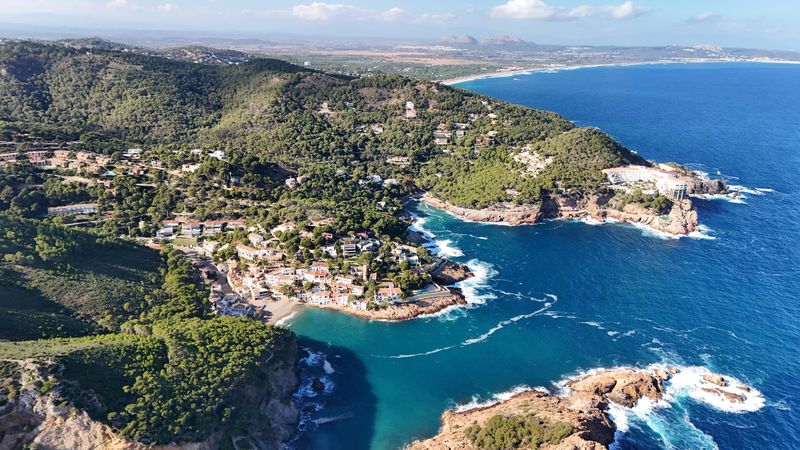
Begur is famous for its coves, probably the most picturesque on the whole Costa Brava.
- Aiguablava — white sand and turquoise water surrounded by pine trees. One of the most photogenic coves on the coast.
- Sa Riera — Begur's biggest beach, with a gentle slope into the water and small restaurants by the sea. Great for families.
- Sa Tuna — a former fishing village with little white houses, boats on the pebbles and the feel of the old Costa Brava.
- Aiguafreda — a small, quiet cove with crystal-clear water, perfect for snorkelling.
- Fornells — a pretty cove with a little boat jetty, right next to Aiguablava.
- Platja Fonda — a dark pebble beach at the foot of the cliffs, reached by a long flight of steps.
Camí de Ronda and Nature
Begur's coves are linked by the Camí de Ronda coastal path. It twists over the rocks and through pine woods, drops down to tiny beaches and climbs back up to lookout points above the sea. The stretches from Sa Tuna to Aiguafreda and from Fornells to Aiguablava are especially beautiful.
The water off Begur is amazingly clear, so it's perfect for snorkelling, diving, kayaking or paddleboarding along the cliffs and sea caves. And from the tops of the hills you get views that bring photographers here from all over the world.
Begur Today
Today Begur is one of the most appealing places on the Costa Brava. Historic architecture, small beaches, coastal walks and the cosy feel of an old Catalan town all sit happily side by side. Tourism here is all about quality, looking after the landscape and keeping local traditions alive.
The highlight of the year is the Indianos Fair in early September. For a few days the town goes back to the 19th century: the streets are decorated in colonial style, locals dress up in period costumes, Cuban music fills the air and the bars serve rum cocktails.
Begur is also a great place for food lovers. Restaurants in the old town and by the sea serve fresh fish, seafood and traditional Catalan dishes. Many visitors come for a day as part of private tours from Barcelona, but most end up wishing they'd booked a few nights.
Airport Transportation: Barcelona to Begur
Begur is about 130 km northeast of Barcelona, so the drive from Barcelona to Costa Brava takes around 1 hour 35 minutes. From Barcelona El Prat airport it's about 140 km, roughly 1 hour 45 minutes on the road. You can also fly into Girona airport, about 50 km away.
The easiest option is private transportation from BCN to your hotel. Your driver meets you in arrivals at Terminal 1 or Terminal 2, helps with your bags and takes you right to your door, even if your hotel sits above a hidden cove. The price is fixed and agreed in advance, and for families and groups there are Mercedes V Class minivans for up to seven people.
When to Go
Begur is lovely any time of year. Summer is sunny and festive, with swims in the coves, dinners on terraces and warm evenings in the old town. June and September are perfect for a beach break, and in early September you can catch the Indianos Fair. In spring and autumn, it's especially nice to walk the Camí de Ronda and take in the views from the castle hill. And in winter Begur offers quiet old lanes, soft sunshine and an endless sea.