
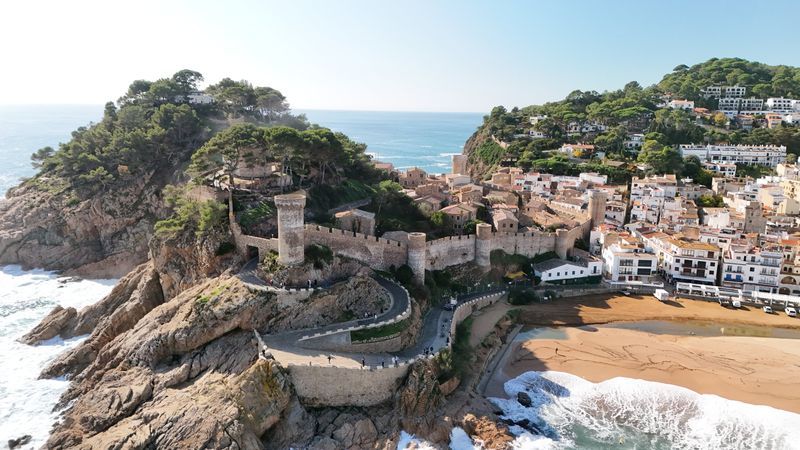
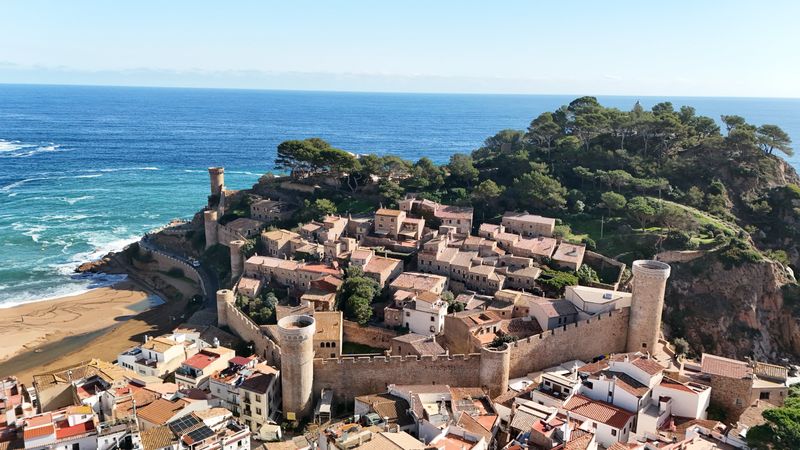
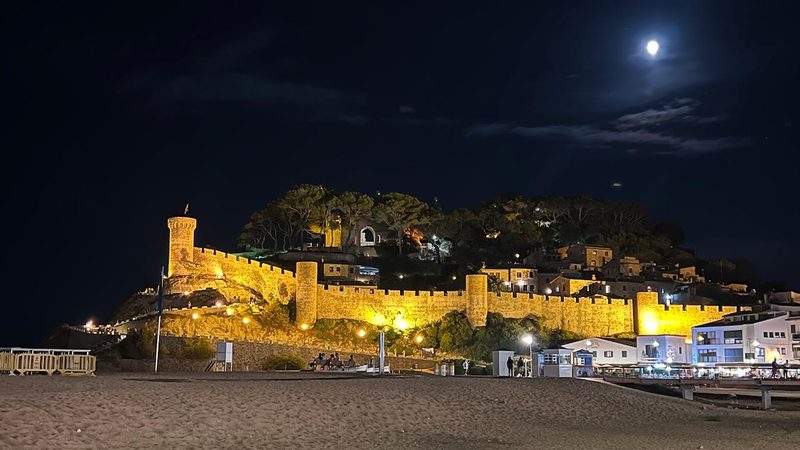
Tossa de Mar might just be the prettiest little town on the Costa Brava. A medieval fortress with round towers rises above the beach, surrounded by coves with crystal-clear water and pine-covered hills. Long before mass tourism, artists and writers were already coming here, and by the 1950s Tossa had become one of the best-known resorts on the coast. Even so, it's managed to stay small and charming.
In this guide you'll find a bit of history, the Vila Vella fortress, the famous Ava Gardner film, the best beaches and coves, plus how to get to Tossa from Barcelona and from the airport. If you're looking for Barcelona side trips with real character, this is one of the best.
A Bit of History
People have lived here since Roman times. On the edge of town you can still see the remains of the Els Ametllers Roman villa, and back then the town was called Turissa. In the Middle Ages, locals built walls around the rocky headland above the sea to protect themselves from pirates. That's how the Vila Vella, the old town that still stands today, came to be.
In the 1930s, artists and writers from all over Europe discovered Tossa. Marc Chagall, André Masson and many others worked here, and Chagall called the town "the blue paradise". In 1935 Tossa opened its Municipal Museum, one of the first museums of modern art in Spain. Today it's home to Chagall's painting "The Celestial Violinist".
After the war, Tossa opened up to international tourism. Hotels, restaurants and everything you need for a holiday arrived, but the town carefully held on to its character and historic look.
Vila Vella: The Fortress Above the Sea
Tossa's number one sight is the Vila Vella. It's the only fortified medieval town still standing on the Catalan coast. The walls and towers were built between the 12th and 14th centuries and wrap around the rocky headland right above the main beach.
Inside, you'll find narrow cobbled lanes, stone houses with flowers on the balconies and the ruins of the Gothic church of Sant Vicenç. A lighthouse sits at the very top of the headland, and the view from up there is one of the best on the coast, especially at sunset.
Entry to the Vila Vella is free. Inside there are a few cosy tapas places, and right at the top, next to the lighthouse, there's a bar with amazing sea views.
Pandora and the Flying Dutchman and Ava Gardner
In 1950, a film crew arrived in Tossa to shoot "Pandora and the Flying Dutchman". Hollywood star Ava Gardner and James Mason played the leads, and Tossa itself became Esperanza, a made-up Spanish village. The film came out in 1951 and put the Costa Brava on the world map.
The shoot was remembered for more than just the scenes. There were rumours of a romance between Gardner and Spanish bullfighter Mario Cabré, who was also in the film, and Frank Sinatra flew to Spain to see her. Tossa never forgot its star: in 1998 a bronze statue of Ava Gardner was put up in the Vila Vella. Pretty much everyone who walks up to the fortress stops for a photo with her.
Beaches and Coves
The main beach, Platja Gran, sits right under the walls of the Vila Vella. Next door, Mar Menuda is smaller and calmer, and it's a favourite with families and snorkellers. Tiny Es Codolar cove is tucked away on the other side of the fortress, right at the foot of the walls.
About 5 km north you'll find Cala Giverola, one of the most beautiful coves in this part of the Costa Brava. Fine sand, calm clear water and pine trees all around make it a great spot for a family day out. On the way, it's worth stopping at Cala Pola and Cala Futadera.
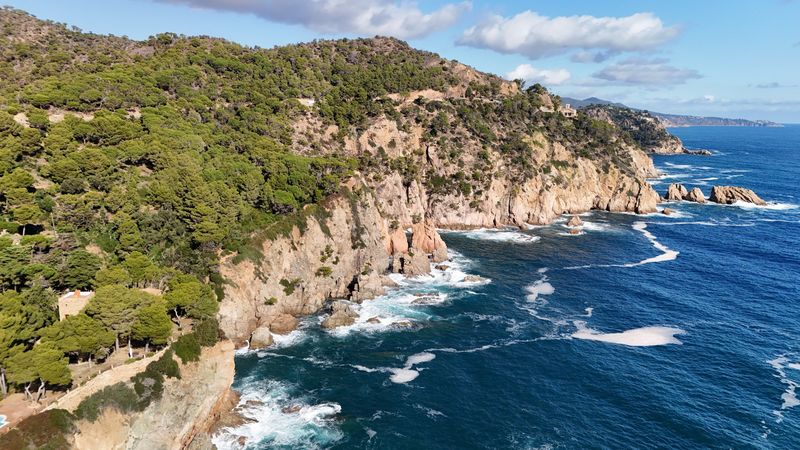
A lot of the coves are linked by the Camí de Ronda coastal path. It winds along the cliffs and through pine woods, with a new view around almost every bend. You can also hop on a boat trip from the main beach and see the coast from the sea.
Tossa Today
Tossa isn't trying to be big. The town focuses on cultural tourism, good food and looking after its historic look. In summer there are concerts and local festivals, and at the Municipal Museum you can see works by the artists who fell in love with this place.
Tossa is especially proud of its local food. Make sure you try cim i tomba, a traditional fishermen's stew made with fish and potatoes and served with aioli. Restaurants in the old town still cook it from family recipes.
How to Get to Costa Brava from Barcelona
Tossa de Mar is about 100 km northeast of Barcelona, around 1 hour 20 minutes by car. There's no train station in Tossa, but direct buses run from Barcelona. If you're travelling with luggage or kids, a car or a Barcelona private car service is the easier way to go.
Lloret de Mar is only about 12 km away, so it's easy to see both towns on one trip. And if you keep driving north from Tossa towards Sant Feliu de Guíxols, you'll be on one of the most scenic roads in Catalonia: a winding route above the sea that locals say has 365 bends.
From Barcelona Airport to Tossa de Mar
Wondering what airport for Barcelona works best for Tossa? Most people fly into Barcelona El Prat. From there, Tossa is about 110 km away, roughly a 1 hour 30 minute drive. You can also fly into Girona airport, just 40 km from Tossa.
The most comfortable option is a Barcelona El Prat airport transfer. Your driver meets you in arrivals at Terminal 1 or Terminal 2, helps with your bags and takes you straight to your hotel. The price is fixed and agreed in advance. For families and groups, a 7 seater airport transfer in a Mercedes V Class gives everyone room to relax after the flight.
When to Go
Tossa is lovely all year round. Summer is sunny and lively, with beaches, boat trips, concerts and festivals. June and September are perfect for a relaxed break by a warm sea. In spring and autumn, it's great to walk the coastal paths and wander the old town. And in winter Tossa shows a different side: soft sunshine, quiet stone lanes and the sound of the waves.